
Acupuncture and Herbal Medicine for Chronic Stress: Easing the Load and Building Resilience
Stress itself isn't the problem. The stress response is one of the body's most useful tools- a fast, coordinated surge of hormones and nervous system activity that sharpens focus, mobilizes energy, and helps you meet a demand. The trouble begins when that response never fully switches off.
Modern life rarely delivers the kind of stress the system was designed for: a brief, acute threat followed by recovery. Instead it delivers a steady drip: deadlines, notifications, financial pressure, caregiving, poor sleep, and the low hum of always being reachable. The body responds to this the same way it responds to a genuine emergency, and when the emergency never ends, the machinery meant to protect you starts to wear you down.
Acupuncture and herbal medicine offer two complementary ways to address this not by eliminating the sources of stress, which no treatment can do, but by changing how your body carries and recovers from it.
What Chronic Stress Does to the Body
When you encounter a stressor, your nervous system shifts into sympathetic dominance (the "fight or flight" state) and your adrenal glands release cortisol and adrenaline. Heart rate rises, blood pressure climbs, digestion slows, muscles tense, and the body prioritizes immediate survival over long-term maintenance.
This is entirely healthy in short bursts. The problem is chronicity. When the stress response stays switched on for weeks, months, or years, the cumulative burden, sometimes called allostatic load, shows up across nearly every system:
Cardiovascular
sustained high blood pressure and inflammation that raise long-term cardiovascular riskImmune
a dysregulated immune response that leaves you more prone to infection and slower to healDigestive
disrupted gut function, from reflux and cramping to changes in appetite and the gut microbiomeSleep
difficulty falling or staying asleep, which then compounds every other effectMood and cognition
anxiety, irritability, difficulty concentrating, and mental fatigueMusculoskeletal
chronic muscle tension, particularly in the neck, shoulders, and jaw, and its downstream headaches and painMetabolic and hormonal
disrupted blood sugar regulation, weight changes, and interference with reproductive and thyroid hormones
Crucially, chronic stress is self-reinforcing. Poor sleep makes you less resilient to the next day's demands; muscle tension feeds pain that becomes its own stressor; anxiety disrupts digestion, which disrupts sleep. Effective care works to interrupt these loops rather than chasing each symptom in isolation.
How Acupuncture Helps with Stress
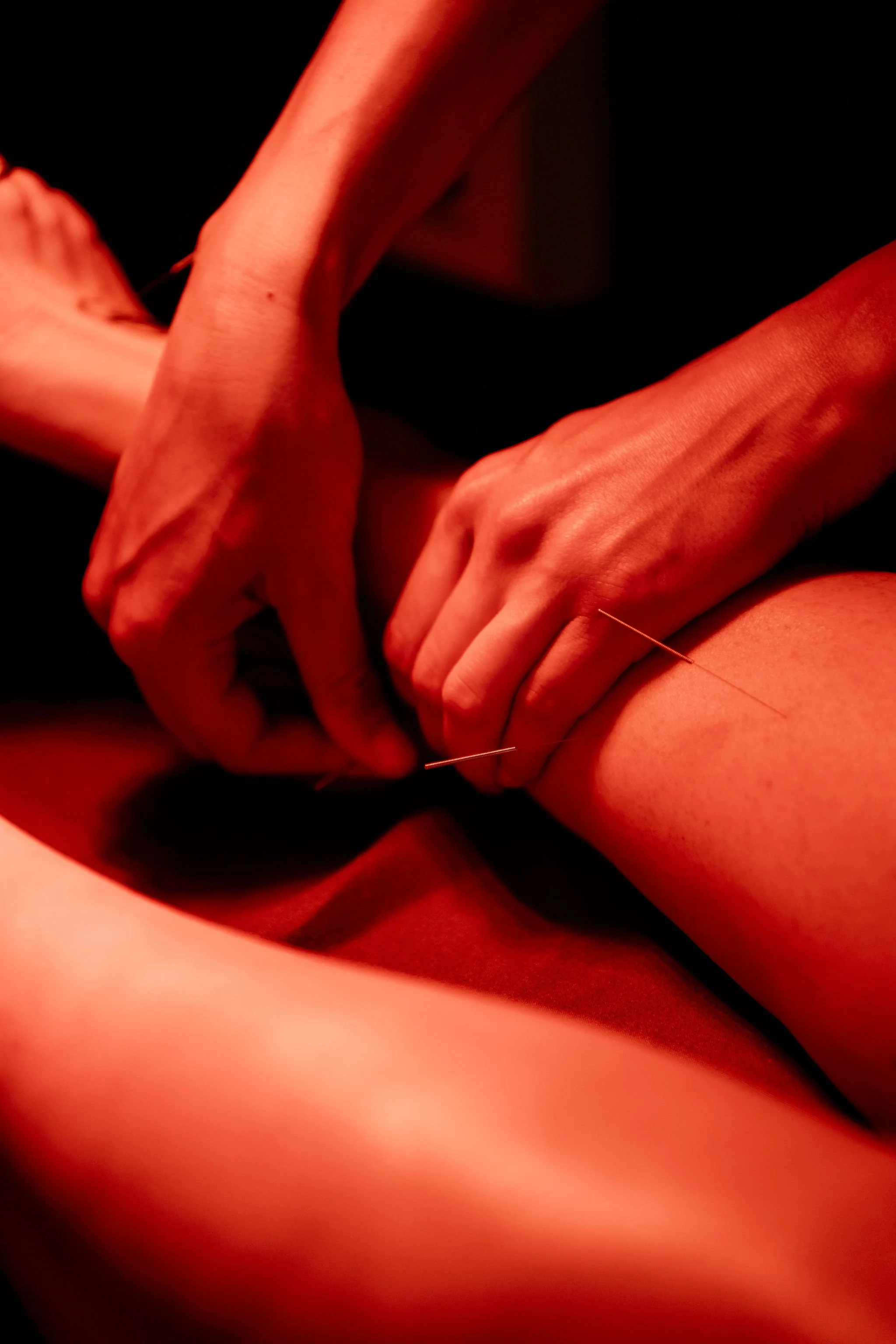
Acupuncture involves the insertion of very fine, sterile, single-use needles at specific points on the body. For stress, treatment often combines calming points on the ears, hands, and feet with points that release the muscular tension stress deposits in the neck, shoulders, and back.
The most relevant mechanism is its effect on the autonomic nervous system; the automatic system that governs the balance between "fight or flight" and "rest and digest." Chronic stress keeps people stuck in sympathetic overdrive. Acupuncture appears to shift the balance back toward parasympathetic activity, the recovery state in which the body repairs, digests, and restores. Many patients feel this shift directly during a session a distinct settling that's sometimes described as an "acupuncture calm," and a good number simply fall asleep on the table.
Several effects contribute:
Autonomic rebalancing
Studies using measures like heart rate variability, a marker of how flexibly the nervous system shifts between states, suggest acupuncture can nudge the system toward a more regulated, resilient pattern.
Cortisol and stress hormone modulation
Research indicates acupuncture may influence the HPA axis, the hormonal cascade that drives cortisol release, helping to dampen an overactive stress response.
Endorphin release
Needling prompts the body to release its own endorphins, which contribute to the sense of ease and improved mood that often follows treatment.
Muscular release
Stress lives in the body as physical tension. Releasing the chronically braced muscles of the neck, shoulders, and jaw removes a source of pain and a constant stream of tension-related signaling.
Better sleep
Many patients report improved sleep as one of the earliest and most valued benefits and because sleep underlies resilience to everything else, that improvement tends to compound.
What patients tend to notice over a course of treatment isn't just calmer sessions, but a raised baseline: the same stressors land with less force, and recovery comes faster.
How Herbal Medicine Helps with Stress
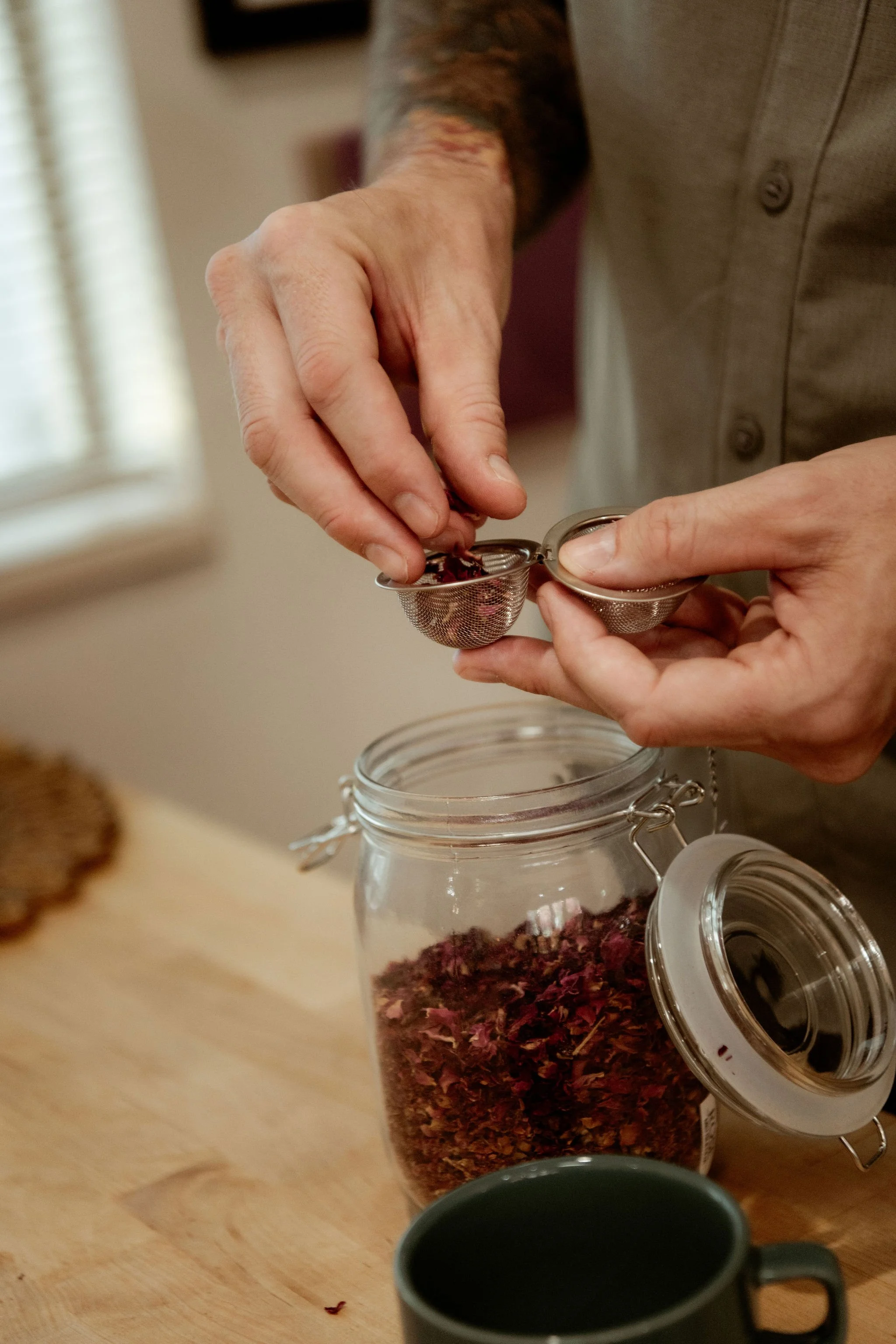
Herbal medicine works differently from acupuncture, and the two complement each other well. Where an acupuncture session produces a shift during and after treatment, herbs work continuously between visits, providing steady support to the systems stress depletes.
A particularly relevant category here is the adaptogens- a class of herbs studied for their capacity to help the body adapt to stress and maintain balance. Rather than sedating or stimulating, adaptogens are thought to help modulate the stress response itself, buffering the highs and lows. Some of the most researched include:
Herbal medicine is a serious intervention, not a casual add-on, and natural does not mean risk-free. Some herbs interact with prescription medications like sedatives, antidepressants, blood thinners, blood pressure and thyroid medications, and others… and some aren't appropriate during pregnancy, breastfeeding, or with certain health conditions. Quality and potency also vary widely between products. This is exactly why herbal support should be guided by a trained practitioner rather than assembled from the supplement aisle. If you're taking any prescription medication, tell both your practitioner and your prescribing physician before starting an herbal protocol. When herbs are a good fit, we'll recommend specific herbs and forms tailored to your situation, and coordinate with your other care.
Acupuncture and Herbs Together: A Combined Approach
Used together, acupuncture and herbal medicine cover more of the picture than either does alone. Acupuncture delivers a reset during each session- a direct shift toward the recovery state and a release of accumulated physical tension. Herbs extend and sustain that support between visits, helping the body hold the gains and gradually rebuild the reserves that chronic stress depletes.
A typical arc of care starts with more frequent acupuncture to interrupt the stress pattern and restore some regulation, paired with an herbal protocol chosen for your specific presentation more calming and sleep-focused if anxiety and insomnia dominate, more restorative and energizing if the picture is one of depletion and burnout. As things stabilize, acupuncture spaces out to a maintenance rhythm, and herbs are adjusted or tapered accordingly.
Alongside treatment, the fundamentals still matter: sleep, movement, time away from screens, and connection. Acupuncture and herbs work best not as a replacement for those things but as support that makes them more achievable, by lowering the baseline arousal that makes healthy habits feel out of reach.
Is This Approach Right for You?
Acupuncture and herbal medicine are worth considering if everyday stress has become a constant background presence, if you're noticing its physical signature: tension headaches, a tight neck and shoulders, disrupted sleep, digestive changes, a short fuse or if you'd like to build resilience proactively rather than wait for stress to take a larger toll.
This kind of care works well alongside conventional treatment and other forms of support rather than in place of them. If you're experiencing significant anxiety or depression, thoughts of harming yourself, or symptoms that interfere substantially with daily functioning, please reach out to a physician or mental health professional these deserve dedicated care, and acupuncture and herbs are best used as a complement to it, not a substitute. If you're in crisis, contact a crisis line or emergency services right away.
