
Acupuncture and Herbal Medicine for Insomnia: Getting Back to Restful Sleep
Almost everyone has the occasional bad night. Insomnia is something else: trouble falling asleep, staying asleep, or waking too early… often enough, and for long enough, that it starts to shape your days. You lie awake watching the clock, or you drop off easily only to snap awake at 3 a.m. with a racing mind, and the next day arrives foggy, irritable, and depleted.
What makes insomnia so frustrating is how self-perpetuating it becomes. A few rough nights breed anxiety about sleep itself, and that anxiety becomes the very thing keeping you awake. Sleep aids can help in the short term, but many people don't want to rely on them nightly, and they don't address why sleep stopped coming easily in the first place.
Acupuncture and herbal medicine offer a different route, one aimed at calming the overactive nervous system underneath insomnia and helping the body relearn how to rest. This article covers how each works, on its own and together.

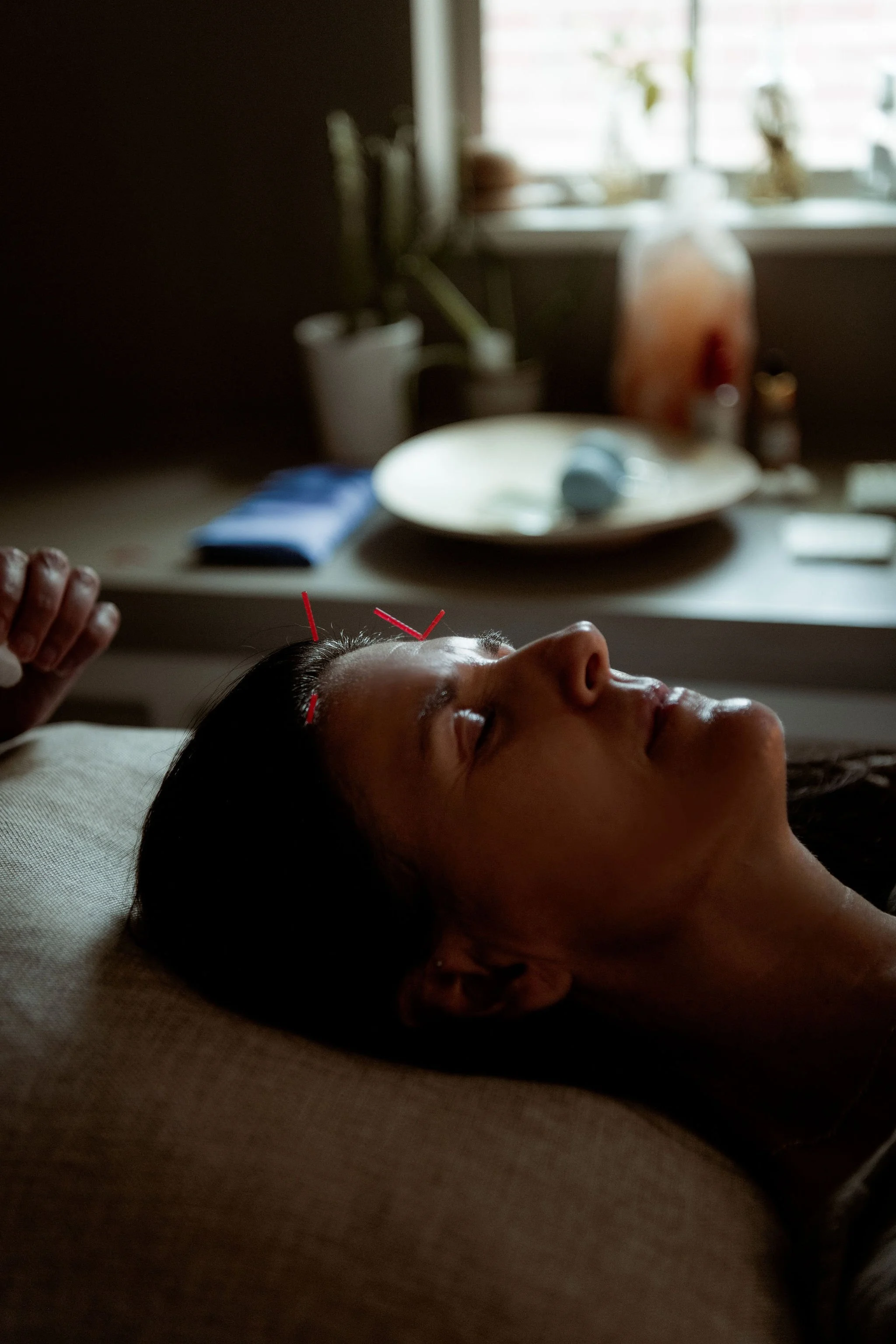
Acupuncture is deeply restful on the table, and support even deeper rest at night
Why Sleep Becomes Elusive
Sleep isn't something you do; it's something you allow. It happens when the nervous system shifts out of alertness and into a recovery state and insomnia, more often than not, is a failure of that shift. Common drivers include:
An overactive stress response
A nervous system stuck in "fight or flight" mode keeps the body primed for wakefulness, not restA racing mind
Anxiety, rumination, and an inability to "switch off" at nightDisrupted circadian rhythm
From shift work, screens, jet lag, or irregular schedules that scramble the body's internal clockHormonal shifts
Perimenopause, menopause, and other hormonal changes frequently disturb sleepPhysical discomfort
Pain, restless legs, or digestive upset that interrupts the nightConditioned arousal
After enough bad nights, the bed itself becomes associated with wakefulness and frustration rather than sleepStimulants and habits
Caffeine, alcohol, and late-night screen exposure that quietly undermine sleep architecture
These layer and reinforce one another. Stress disrupts sleep; poor sleep raises stress hormones; higher stress makes the next night harder. Effective care works to break that cycle rather than simply sedating you through it.
How Acupuncture Helps with Insomnia
Acupuncture involves the insertion of very fine, sterile, single-use needles at specific points on the body. For insomnia, treatment typically combines calming points on the ears, wrists, and lower legs with points chosen to address whatever's driving your particular sleep pattern: anxiety, hormonal change, digestive upset, or pain.
The central mechanism is its effect on the autonomic nervous system; the automatic system governing the balance between "fight or flight" and "rest and digest." Insomnia tends to keep people stuck in the aroused, alert state. Acupuncture appears to shift the balance toward parasympathetic activity, the recovery mode that makes sleep possible. Many patients feel this directly on the table, sinking into a deep calm and a good number fall asleep during treatment, which is often the first sign the nervous system knows how to let go.
Several effects contribute:
Autonomic rebalancing
By nudging the nervous system out of overdrive, acupuncture helps re-establish the physiological conditions sleep depends on.
Melatonin and sleep regulation
Some research suggests acupuncture may influence melatonin, the hormone that governs sleep timing, supporting a more natural sleep-wake rhythm.
Reduced anxiety and arousal
Because so much insomnia is driven by a mind that won't quiet, acupuncture's calming, anxiety-reducing effect addresses one of the root causes rather than the symptom alone.
Endorphin release
Needling prompts the body to release its own endorphins, contributing to the sense of ease that often follows a session.
Relief of physical discomfort
When pain or tension is fragmenting your sleep, releasing it removes a concrete barrier to staying asleep.
What patients tend to report over a course of treatment isn't only better nights, but a changed relationship to sleep — less dread at bedtime, and more confidence that rest will come.
How Herbal Medicine Helps with Insomnia
Herbal medicine works differently from acupuncture, and the two pair naturally. Where an acupuncture session produces a shift during and after treatment, herbs work night after night between visits, gently supporting the nervous system's ability to wind down.
Which herbs suit you depends on the shape of your insomnia. Trouble falling asleep because of a racing mind calls for something different than waking at 3 a.m. unable to return to sleep, and stress-driven sleeplessness calls for a different emphasis than hormonally driven sleeplessness. This is where a trained practitioner's guidance matters… matching the herb, the form, and the timing to your specific pattern.
Herbal medicine is a genuine intervention, not a casual add-on, and natural doesn’t mean risk-free. Several sleep herbs interact with prescription medications, especially sedatives, benzodiazepines, antidepressants, and other sleep aids, where the effects can compound, and some aren't appropriate during pregnancy, breastfeeding, or with certain conditions. Potency and quality also vary widely between products. If you take any prescription medication, particularly anything affecting the nervous system, tell both your practitioner and your prescribing physician before starting an herbal protocol. When herbs are a good fit, our resident clinical nervous system herbalist will recommend specific ones and forms suited to your situation and coordinate with your other care.
Acupuncture and Herbs Together: A Combined Approach
Used together, acupuncture and herbal medicine address insomnia from both directions. Acupuncture works to reset an overactive nervous system and re-establish the physiological conditions for sleep; herbs provide nightly support that reinforces the shift between visits, helping the body settle into a more reliable rhythm.
A typical arc of care begins with more frequent acupuncture to interrupt the insomnia pattern, paired with an herbal protocol matched to your presentation- more sedating and sleep-focused if the issue is falling or staying asleep, more stress- and cortisol-oriented if anxiety and a racing mind are the engine. As sleep stabilizes, acupuncture spaces out to a maintenance rhythm and herbs are adjusted or tapered, with the goal of restoring sleep you can sustain on your own rather than a dependence on nightly aids.
Alongside treatment, sleep fundamentals still do a lot of the work; a consistent sleep and wake time, a wind-down routine, a cool and dark room, and limiting screens, caffeine, and alcohol in the hours before bed. These behavioral pieces (the core of what's called sleep hygiene, and more formally cognitive behavioral therapy for insomnia, or CBT-I) are the most evidence-backed approach to chronic insomnia. Acupuncture and herbs work best not as a replacement for them but as support that makes them easier to sustain, by lowering the arousal that keeps good habits from taking hold.
Is This Approach Right for You?
Acupuncture and herbal medicine are worth considering if you have trouble falling or staying asleep, if you'd prefer to avoid or reduce reliance on sleep medication, if stress and a racing mind are keeping you up, or if hormonal changes have disrupted sleep that used to come easily.
This kind of care works well alongside conventional treatment rather than in place of it. Some sleep problems have specific medical causes that deserve dedicated evaluation- if you snore heavily, gasp or stop breathing during sleep, or feel unrefreshed no matter how long you're in bed, ask your physician about a sleep study, as these can signal sleep apnea. Likewise, if insomnia accompanies significant depression or anxiety, or persistent thoughts of harming yourself, please reach out to a physician or mental health professional; these deserve dedicated care, and acupuncture and herbs are best used as a complement to it.
