
Acupuncture for Thyroid Conditions in Salt Lake City - Hypothyroid, Hyperthyroid, and Autoimmune Thyroid Health
If you're living with a thyroid condition, you know it touches almost everything: your energy, your weight, your mood, your sleep, your temperature, your hair and skin, even your heart rate. The thyroid is a small gland with an outsized job, and when it's over- or under-active, the ripple effects reach the whole body.
Most people managing a thyroid condition are already working with a physician and, in many cases, taking medication. That's appropriate, and nothing here is meant to replace it. But a lot of patients still don't feel like themselves even when their labs look "normal," and they come to us asking whether acupuncture and herbal medicine can help them feel better and support their overall thyroid health. It's a fair question, and the research offers some encouraging, if still early, answers. Here's an honest look at what we know.
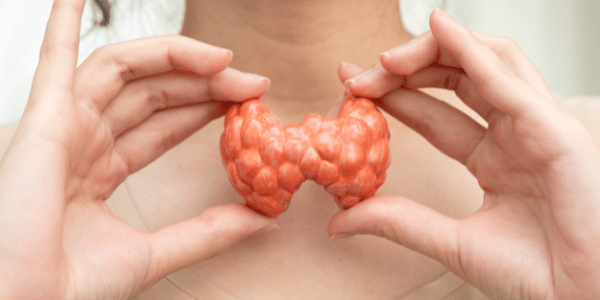
An Overview of Your Thyroid
The thyroid produces hormones (chiefly T3 and T4) that regulate metabolism throughout the body. The pituitary gland keeps this in check using thyroid-stimulating hormone, or TSH. Problems generally fall into a few categories:
Hypothyroidism (underactive thyroid)
The thyroid makes too little hormone, which tends to slow everything down: fatigue, weight gain, cold sensitivity, brain fog, dry skin, constipation, and low mood.
Hyperthyroidism (overactive thyroid)
The thyroid makes too much hormone, which speeds things up: anxiety, racing heart, weight loss, heat intolerance, tremor, and trouble sleeping.
Hashimoto's thyroiditis
An autoimmune condition where the immune system attacks the thyroid. It's the most common cause of hypothyroidism, marked by elevated thyroid antibodies (TPOAb and TgAb).
Graves' disease
An autoimmune condition that's the most common cause of hyperthyroidism.
Other Related patterns
Thyroid nodules, goiter, postpartum thyroiditis, and the persistent symptoms many people feel even when medication has brought their labs into range.
Conventional care (thyroid hormone replacement for hypothyroidism, antithyroid medication or other approaches for hyperthyroidism) is the foundation of treatment. Where acupuncture and herbal medicine come in is as complementary support, working alongside that care.
How Acupuncture Can Support Thyroid Health
Acupuncture involves placing very fine, sterile, single-use needles at specific points on the body. Research points to several mechanisms that are relevant to thyroid conditions.
It may help regulate the immune response
Because Hashimoto's and Graves' are autoimmune, the immune system is central. Some research suggests acupuncture can influence immune and inflammatory signaling, which is the mechanism most relevant to autoimmune thyroid disease.
It calms the nervous system
Acupuncture shifts the body toward its "rest and digest" (parasympathetic) state and away from "fight or flight." This matters for the anxiety, palpitations, and sleep disruption common in hyperthyroidism, and for the stress load that affects everyone managing a chronic condition.
It supports symptom relief and quality of life
Beyond lab values, much of what makes thyroid conditions hard to live with is the daily symptom burden. This is where patients most often report benefit.
It may help modulate the stress-hormone axis
The HPA axis (the body's central stress-response system) interacts with thyroid function, and acupuncture appears to influence it.
What the Research Actually Says
Here's where we want to be straight with you, because a research-grounded answer means acknowledging both the promising findings and their limits.
The strongest evidence is for Hashimoto's thyroiditis. A 2024 systematic review and meta-analysis published in Medicine pooled 14 randomized controlled trials with 1,020 patients and found that, compared with levothyroxine alone, acupuncture was associated with meaningful reductions in thyroid antibodies (TPOAb and TgAb) and favorable changes in thyroid hormone levels (FT3, FT4, and TSH). This is notable because standard thyroid medication improves hormone levels but doesn't typically lower the antibodies driving the autoimmune process. A separate 2025 meta-analysis looking at acupuncture and moxibustion reached similar conclusions, again reporting reductions in TPOAb, TgAb, and TSH.
There's mechanistic support, too. Laboratory research in animal models of autoimmune thyroiditis has found that acupuncture appears to modulate the gut microbiota and inflammatory pathways, offering a plausible biological explanation for the clinical findings, though animal research doesn't automatically translate to people.
The hyperthyroidism and Graves' evidence is thinner. Most of the higher-quality research to date centers on Hashimoto's and hypothyroid-range autoimmune disease. For hyperthyroidism and Graves', the current evidence leans toward acupuncture as supportive care (for example, helping with anxiety, sleep, and postoperative recovery after thyroid surgery) rather than as a primary treatment for the overactivity itself.
Now the important caveats. Most of these trials were conducted in China, sample sizes are relatively modest, study quality varies, and larger, rigorously designed international trials are still needed. So the honest summary is this: the existing research is genuinely encouraging, especially for autoimmune thyroid conditions and for quality of life, but it isn't the final word. We'll always talk through what the evidence does and doesn't establish for your specific situation.
Where Herbal Medicine Fits In
Herbal medicine is the natural companion to acupuncture, and the two are often used together. Where an acupuncture session produces a shift during and after treatment, herbal formulas work continuously between visits.
At Flow, we draw on both Western and Chinese herbal traditions and match the formula to the person rather than to a diagnosis alone. Depending on your pattern, herbs might be selected to support energy and warmth in hypothyroid presentations, to calm an overactive, anxious, "revved-up" state in hyperthyroid presentations, or to support the body's regulation of inflammation in autoimmune cases. Some research on herbal preparations for Hashimoto's has likewise reported reductions in thyroid antibodies, which fits what we see clinically as a useful adjunct.
A few important safety notes, because the thyroid is genuinely a case where the details matter:
Iodine is a real concern. Certain supplements and herbs (kelp and bladderwrack, for example) are high in iodine, which can worsen some thyroid conditions rather than help. This is one of many reasons not to self-prescribe.
Interactions are common. Some herbs affect the absorption or action of thyroid medication. Timing and selection need to be handled carefully.
"Natural" doesn't mean "risk-free." Quality varies widely between products, and the right herb for one thyroid pattern can be the wrong one for another.
If you take thyroid medication (or any prescription), tell both your practitioner and your prescribing physician before starting any herbal protocol. When herbs are a good fit, we'll recommend specific ones and coordinate with your other care.
What to Expect at Flow Acupuncture in Salt Lake City
Your first visit runs longer than later appointments. We'll take a thorough history that covers not just your thyroid diagnosis and labs but your energy, sleep, digestion, mood, cycle, temperature, and stress, because thyroid conditions rarely show up in isolation. Treatment usually follows in the same visit.
During treatment, needles are inserted and left in place for roughly 20 to 30 minutes. Most people find it deeply relaxing, and many fall asleep on the table.
Course of care for a chronic condition like a thyroid disorder is typically a longer arc: often weekly to start, then spacing out as things stabilize. Because thyroid antibodies and symptoms change gradually, this is a marathon rather than a sprint, and we'll set realistic expectations after your first visit.
Throughout, we work alongside your endocrinologist or primary care physician, not instead of them. Keep taking your medication as prescribed, keep your lab appointments, and let acupuncture and herbal medicine support the rest.
Is This Right for You?
Acupuncture and herbal medicine are worth considering if you have a thyroid condition and still don't feel your best even on medication, if you're dealing with the anxiety, fatigue, sleep trouble, or brain fog that often come with thyroid imbalance, if you have an autoimmune thyroid condition and want to support your body more broadly, or if you simply prefer a whole-person approach alongside your conventional care.
Please seek prompt medical care, not acupuncture, for signs of severe thyroid dysfunction: a very rapid or irregular heartbeat, severe agitation or confusion, high fever, or a significant swelling in the neck that affects breathing or swallowing. These can signal serious conditions that need immediate attention.
Ready to Get Started?
If you're managing a thyroid condition in Salt Lake City and want thoughtful, whole-person support alongside your medical care, we'd like to help. New patient appointments include a full assessment, an initial treatment, and a conversation about whether herbal support makes sense for you.
References
Wang X, Li Y, Xie H, Dai Z, Ma L, Zhu X, Zhan T. "Effect of acupuncture on Hashimoto thyroiditis: A systematic review and meta-analysis." Medicine (Baltimore). 2024;103(9):e37326. https://pubmed.ncbi.nlm.nih.gov/38428856/
"A systematic review, meta-analysis, and trial sequential analysis of the effect of acupuncture and moxibustion cake on thyroid function in patients with Hashimoto thyroiditis." Medicine (Baltimore). 2025. https://pmc.ncbi.nlm.nih.gov/articles/PMC13138462/
"Acupuncture attenuates experimental autoimmune thyroiditis by modulating intestinal microbiota and palmitic acid metabolism." 2025. https://pmc.ncbi.nlm.nih.gov/articles/PMC12066539/
American Thyroid Association. Patient information on hypothyroidism, hyperthyroidism, and Hashimoto's thyroiditis. https://www.thyroid.org/thyroid-information/
