
Acupuncture and Herbal Medicine for Heartburn and GERD · Calming the Fire from the Root
That burning behind the breastbone, the sour taste creeping up your throat, the discomfort that flares after meals or when you lie down at night: heartburn is one of the most common complaints there is, and for a lot of people it doesn't stay occasional. When reflux becomes frequent, it earns a name, GERD, or gastroesophageal reflux disease, and it can start to shape what you eat, how you sleep, and how you feel through the day.
Antacids and acid-suppressing medications can bring real relief, and for many people they're an important part of care. But they work by reducing acid rather than addressing why reflux is happening in the first place, and plenty of people don't want to stay on them indefinitely, especially given the questions around long-term use. If you're looking for an approach that works on the underlying patterns, acupuncture and herbal medicine offer a different angle. This article covers how each one helps, on its own and together.

What's Actually Happening with Reflux
Heartburn happens when stomach contents wash back up into the esophagus, which doesn't have the protective lining the stomach does. The result is that familiar burn. A few things tend to be involved:
A loose lower esophageal sphincter
The muscular valve between the esophagus and stomach is supposed to stay closed except when you swallow. When it relaxes at the wrong times, acid escapes upward.
Delayed stomach emptying
When the stomach is slow to move food along, pressure builds and reflux becomes more likely.
Stress and the gut-brain connection
The gut and nervous system are in constant conversation, and stress can alter gut motility, acid sensitivity, and how strongly you feel symptoms.
Diet and lifestyle triggers
Large meals, eating late, alcohol, caffeine, and certain foods can all provoke reflux, as can extra abdominal pressure.
Heightened sensitivity
Some people have a more reactive esophagus, feeling symptoms even with normal amounts of acid.
Because these factors interact, treatment that only neutralizes acid can leave the drivers in place. An approach that also addresses motility, stress, and sensitivity tends to reach more of the picture.
How Acupuncture Helps with Heartburn and GERD
Acupuncture involves the insertion of very fine, sterile, single-use needles at specific points on the body. For reflux, treatment often combines points on the abdomen with points on the lower legs, wrists, and back that influence digestion and the nervous system.
One of the more interesting findings in this area concerns the lower esophageal sphincter itself. Research suggests acupuncture can influence the pressure and behavior of that valve, helping reduce the inappropriate relaxations that let acid escape. That's a mechanism working on a cause of reflux, not just the sensation of it.
Several effects appear to contribute:
Improved motility
Acupuncture can help regulate the muscular contractions that move food through the digestive tract, which supports more timely stomach emptying and less backup.
Calming the gut-brain axis
Because stress plays such a large role in reflux, acupuncture's effect on the nervous system matters here. By shifting the body toward its "rest and digest" state, it addresses one of the common drivers of symptoms.
Reduced symptom sensitivity
Acupuncture appears to modulate how the body perceives discomfort, which can turn down the volume on an over-reactive esophagus.
Stress relief
Many people notice their reflux tracks closely with their stress levels. The broader calming effect of treatment often shows up as fewer and milder flares.
Patients frequently pair acupuncture with reflux medication at first, then work with their prescribing physician on whether they can reduce it over time. Acupuncture fits comfortably alongside conventional care rather than replacing it.
How Herbal Medicine Helps with Heartburn and GERD
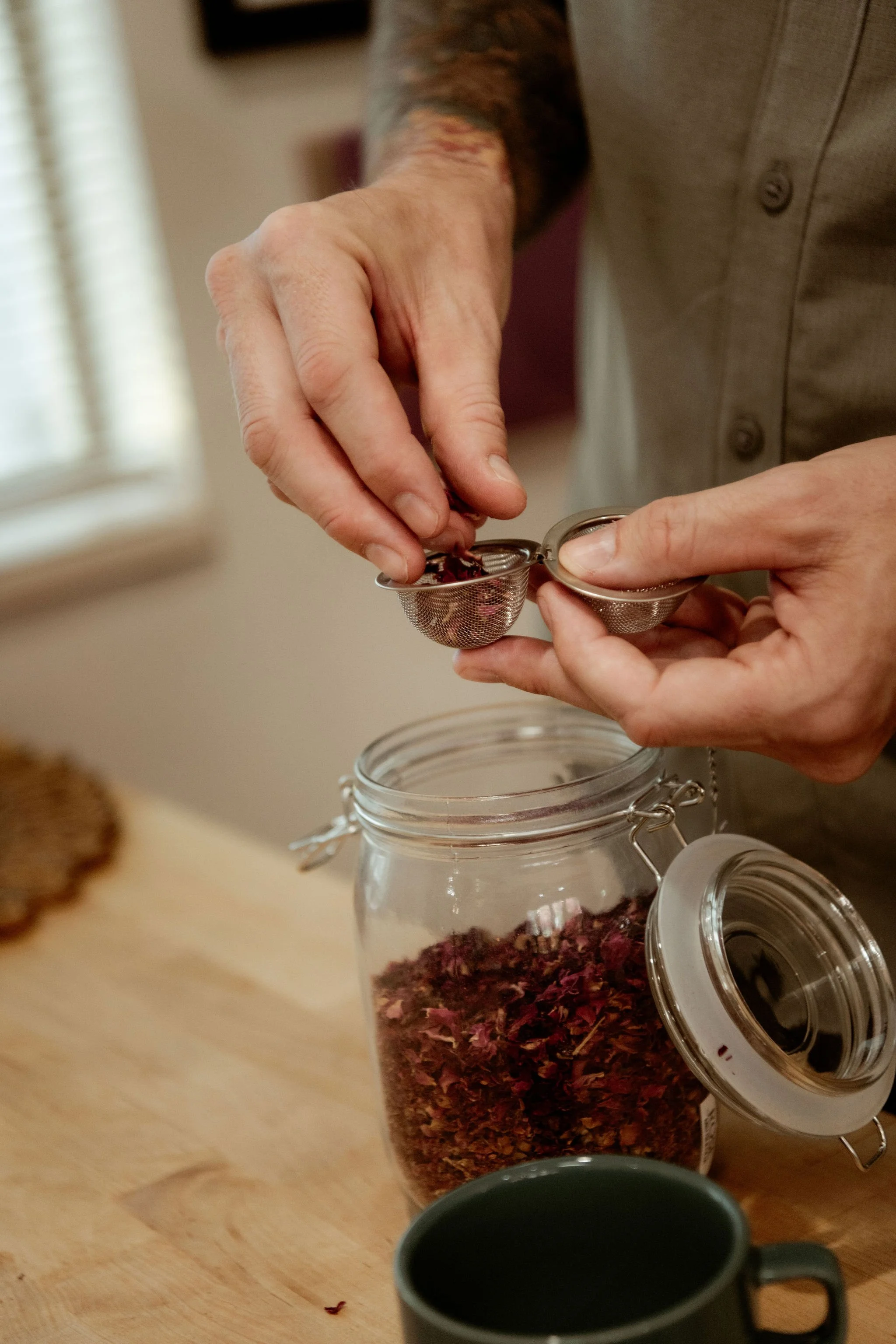
Herbal medicine works differently from acupuncture, and the two complement each other well. Where an acupuncture session produces a shift during and after treatment, herbs work daily between visits, supporting the tissues and functions involved in digestion. We draw on both Western and Chinese herbal traditions and choose what fits the person in front of us.
A number of herbs have long been used for reflux and digestive irritation, working through a few different routes:
Demulcents that soothe and coat
Herbs like slippery elm, marshmallow root, and deglycyrrhizinated licorice (DGL) form a soothing layer that can protect irritated tissue and ease the burn. DGL in particular has been studied for supporting the stomach and esophageal lining.
Carminatives that support digestion
Gentle digestive herbs such as ginger, chamomile, and fennel can help settle the stomach and encourage things to move along, though they're matched carefully to the person since some warming herbs don't suit every case of reflux.
Nervines for the stress connection
When stress is driving symptoms, calming herbs such as chamomile and lemon balm address that link, easing both the mind and the gut.
Bitters, used selectively
In the right circumstances, bitter herbs can support healthy digestive function, though they're chosen with care in reflux since they aren't right for everyone. The herbal bitters blend crafted by our resident herbalist Josh Williams is a true delight!
Which herbs suit you depends on the nature of your reflux, other symptoms, and your overall constitution, which is exactly why this is worth doing with guidance rather than from the supplement aisle. A formula that soothes and protects may serve one person well, while another needs more emphasis on motility or on the stress piece.
Herbal medicine is a real intervention, not a casual add-on, and "natural" doesn't mean "risk-free." Some herbs interact with medications, ordinary licorice can raise blood pressure and affect potassium (which is why the deglycyrrhizinated DGL form is usually preferred), and some herbs aren't appropriate during pregnancy, breastfeeding, or with certain conditions. Quality varies between products too. If you take any prescription medication, tell both your practitioner and your prescribing physician before starting an herbal protocol. When herbs are a good fit, we'll recommend specific ones and forms suited to your situation and coordinate with your other care.
Acupuncture and Herbs Together · A Combined Approach
Used together, acupuncture and herbal medicine address reflux from both directions. Acupuncture works to improve the mechanics and nervous system regulation behind reflux, tightening sphincter function, supporting motility, and calming the gut-brain axis. Herbs provide daily support that soothes irritated tissue and reinforces better digestion between visits.
A typical arc of care starts with more frequent acupuncture to interrupt the pattern, paired with an herbal protocol matched to your presentation, more soothing and protective if tissue irritation dominates, more motility- or stress-focused if that's the driver. As symptoms settle, acupuncture spaces out to a maintenance rhythm and herbs are adjusted or tapered.
Alongside treatment, some straightforward habits do a lot of the work. Eating smaller meals, not lying down for a few hours after eating, raising the head of the bed, and identifying your personal trigger foods can meaningfully reduce reflux. Acupuncture and herbs work best not as a replacement for these basics but as support that helps the whole system function better while you put them in place.
Is This Approach Right for You?
Acupuncture and herbal medicine are worth considering if you have frequent heartburn or diagnosed GERD, if you'd prefer to avoid or reduce long-term acid-suppressing medication, if stress seems to worsen your symptoms, or if you've gotten only partial relief from medication alone and want to address more of the picture.
This kind of care works well alongside conventional treatment rather than in place of it, and some reflux symptoms warrant medical evaluation first. Please see a physician promptly if you have difficulty or pain when swallowing, unexplained weight loss, vomiting, black or bloody stools, or persistent symptoms that don't respond to treatment, since these can point to conditions that need direct medical care. Chest pain in particular can signal a heart problem rather than reflux, so if you're ever unsure, treat it as an emergency and seek immediate care. Longstanding GERD also deserves regular follow-up with your physician to monitor the health of the esophagus. A Combined Approach
Used together, acupuncture and herbal medicine address reflux from both directions. Acupuncture works to improve the mechanics and nervous system regulation behind reflux, tightening sphincter function, supporting motility, and calming the gut-brain axis. Herbs provide daily support that soothes irritated tissue and reinforces better digestion between visits.
A typical arc of care starts with more frequent acupuncture to interrupt the pattern, paired with an herbal protocol matched to your presentation, more soothing and protective if tissue irritation dominates, more motility- or stress-focused if that's the driver. As symptoms settle, acupuncture spaces out to a maintenance rhythm and herbs are adjusted or tapered.
Alongside treatment, some straightforward habits do a lot of the work. Eating smaller meals, not lying down for a few hours after eating, raising the head of the bed, and identifying your personal trigger foods can meaningfully reduce reflux. Acupuncture and herbs work best not as a replacement for these basics but as support that helps the whole system function better while you put them in place.
Ready to Get Started?
If heartburn or GERD is wearing on you, we'd like to help you get to the root of it. New patient appointments include a full assessment, an initial treatment, and a conversation about whether herbal support makes sense for you.
Questions before booking? Reach out. We're glad to talk through whether this approach is a reasonable fit for your situation.
